


All blog posts
Explore the world of design and learn how to create visually stunning artwork.

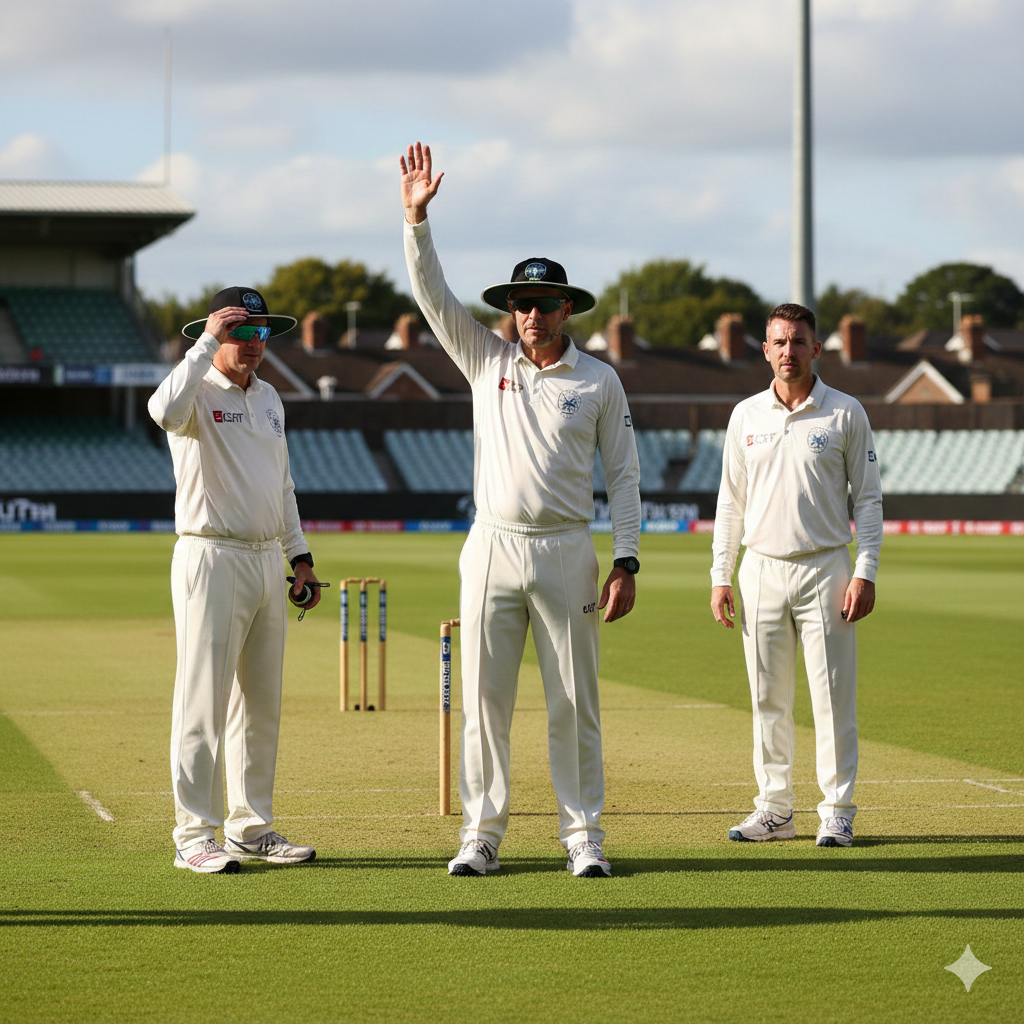
How do you become a cricket umpire and How do you get a job?
January 2, 2026 | by monuyadaver@gmail.com

How do you become a pilot, and what is the salary?
December 29, 2025 | by monuyadaver@gmail.com


Sustainable development
December 27, 2025 | by monuyadaver@gmail.com

UP Lekhpal Recruitment Notification Out 2026
December 20, 2025 | by monuyadaver@gmail.com




In cricket, just as important as the players are the two individuals standing on the field who have no affiliation with either team, yet no match can be played without them. One right or wrong decision from them can change the course of the match.
We are talking about cricket umpires.
But becoming an umpire is not easy. Nor is it simply a matter of memorizing the rules. Becoming an umpire involves years of hard work, training, learning from mistakes, and gaining experience.
Now comes the next important question.
How does one become an umpire? Is it necessary to be a cricket player, or are there other ways? How much do they earn, and what is the career growth trajectory in this profession?
In today’s episode of the Career Connect series, we sought answers to these questions from renowned umpires.
The question often arises whether any special education is required to become an umpire. The answer is ‘no’.
You can have studied in any field; you just need to be interested in the rules of cricket. Also, this profession requires standing on the field for many hours, so being physically fit is essential.
S.K. Bansal, who has been an umpire on both the BCCI and ICC panels, says that only knowledge of cricket is necessary to become an umpire. Bansal is the same person who umpired the historic match played at Eden Gardens in Kolkata in March 2001.
In that match, the Indian team, playing against Australia, created history by defeating the Kangaroos despite being forced to follow on. VVS Laxman’s innings of 281 runs and Rahul Dravid’s 180 runs in that match are still considered milestones.
He told BBC Hindi, “If someone has played cricket or is still playing, they can do well in umpiring, but if they have never played cricket and think they can enter the field of umpiring, it might be a difficult task.”
Experts say that good communication skills and knowledge of English are essential to become an umpire. English is necessary because it is the common language of cricket. Players from different countries participate in international matches, and English is the medium of communication.
What is the process to become an umpire?
If you are between 18 and 40 years old, register with your state’s cricket association. For example, if you live in Delhi, register with the Delhi and District Cricket Association (DDCA), or if you are in Uttar Pradesh, register with the UP Cricket Association (UPCA).
You may have seen cricket umpire Anil Chaudhary officiating in the IPL and several international matches. These days, he is doing commentary and making videos on cricket umpiring.
When we asked him about the registration process, he said, “Anyone can register; there are no rules regarding educational qualifications. Even someone who has passed the 12th grade can become an umpire. Then, meet the sports officer or the umpiring in-charge at the state association and express your interest in umpiring. Start from there; you don’t need to pass any exams at that stage.”
How do you become a pilot, and what is the salary?
Anil Chaudhary said, “They will tell you if you need to fill out any forms, and if you get a chance to umpire in their league matches, definitely do it. Or, follow whatever local setup they have. Meet the senior umpires there; they will explain the entire process. The basic point is that if you want to progress, your journey will begin with the state body.”
Anil Chaudhary explained that there is no exam to start umpiring, but when the state cricket associations form panels, the selection is done through an exam that they conduct themselves.
He said, “To join the BCCI, it is essential to gain experience in local matches first. After that, those whose names are sent by the state associations have to take the BCCI exam. Earlier, the BCCI conducted Level 1 and Level 2 exams, but now there is only one exam.”
How do you get a job?
Whenever cricket associations conduct exams for umpires, they typically announce the dates on social media, print media, or other platforms.
Anil Chaudhary says, “Many state cricket associations conduct their own exams first, and then when the BCCI’s umpiring exam is held, they send the names of their candidates. Generally, only those who are already umpiring and are familiar with the state’s new rules are nominated.”
He explains that the exam process involves a theory test, followed by a practical test, and finally a viva voce. A combined score of 90 percent across all three exams is required to proceed.
According to Anil Chaudhary, after passing the BCCI exam, umpires start getting matches, but initially, they officiate junior-level matches, such as Under-15 and Under-19. As their quality improves and their performance is good, the BCCI promotes them.
According to experts, this is followed by umpiring in senior matches, such as the Duleep Trophy, Ranji Trophy, T20, and T20 knockout matches. This journey takes about five to six years.
After this, the best umpires get to officiate in IPL matches first, and then they start getting international matches.
According to Chaudhary, there are approximately 150 umpires in the BCCI. On average, a vacancy arises once every three years.
How to get a place in the ICC?
India’s Nitin Menon is currently a member of the ICC Elite Panel. Image source, Getty Images
Image caption, India’s Nitin Menon is currently a member of the ICC Elite Panel
The International Cricket Council (ICC) has created a panel of the world’s best umpires. This panel was first formed in 2002.
Currently, India’s Nitin Menon is also a member of this panel. The responsibility of umpiring in any major ICC tournament, such as the World Cup or Test series, rests with the members of this panel. S.K. Bansal has been a member of this panel.
He explains, “Only two or four out of all the BCCI umpires can become international umpires. As their experience grows and the BCCI prepares performance reports for each of their matches, they are then assigned international and Test matches based on these reports.”
S.K. Bansal says, “The Elite Panel signifies extraordinary umpiring. International matches, such as the World Cup or the Asia Cup, are officiated by these umpires because the chances of them making a mistake are negligible.”
Which subject should I study?
Now the question is, if no specific degree is required, then what should one study to become an umpire? What is the necessary study material, and where can it be found?
Anil Chaudhary said:
First of all, you should have the MCC (Marylebone Cricket Club) Law Book. It is easily available online or in bookstores.
There is another book that helps in understanding the concepts of the laws. It is “Cricket Umpiring and Scoring” by Tom Smith. Make sure to buy the latest edition.
After that, read the latest playing conditions of the BCCI (Board of Control for Cricket in India). Because the exam will be based on the BCCI’s playing conditions.
According to Anil Chaudhary, the BCCI wants people who also play cricket to become umpires, and this is also part of their selection process.
How important is fitness?
If someone has weak eyesight but can see clearly with glasses, then there is no problem in their selection.
Anil Chaudhary says, “It’s important for the candidate to be fit in terms of weight, hearing, and eyesight. How can an overweight umpire stand on the field for seven or eight hours? The game has become so fast these days. If someone is not physically fit, they also get mentally fatigued. Then everything goes wrong.”
He says that some skills are more important than academic qualifications. For example, one should have self-confidence, good judgment and understanding, respect for the game, and good communication skills. But this doesn’t mean you only need to know how to speak English.
Meanwhile, S.K. Bansal said, “Even with glasses, one should have perfect vision because if you can’t even see the ball, then what’s the point? You should be fit enough to move along with the ball. For example, if a batsman hits a shot towards me and I can’t even protect myself, then what kind of umpire am I? Just as a batsman knows how to hit the ball with the bat while protecting their body, an umpire also needs to take care of their body, and this is only possible with fitness.”
How much money do they earn?
According to experts, umpiring is a profession that offers a good salary and excellent benefits.
According to Anil Chaudhary, “You get to stay in five-star or top-quality hotels, and you get airfare. You also receive other allowances. The facilities provided by the BCCI for domestic cricket are so good that even international umpires in many countries don’t get them.”
He explains that in club matches these days, an umpire earns an average of around three thousand rupees per day. In addition, they receive travel and accommodation expenses.
According to him, “When you start umpiring for the BCCI, you get 40,000 rupees on match days. If the match is scheduled for five days, even if it finishes in two days, you still get paid for five days. Those who start with the BCCI get about forty days of umpiring work in a year. Some even work for 70 days.”
Anil Chaudhary says, “You just need to have the ability and skill to remain composed on the field amidst the heat, dust, and aggressive play.”
The retirement age for an umpire is 65 years, but people usually retire at 60. However, after retirement, they don’t receive any benefits from the BCCI.