


The Invisible Threat We Breathe: Understanding Air Pollution
November 21, 2025 | by monuyadaver@gmail.com

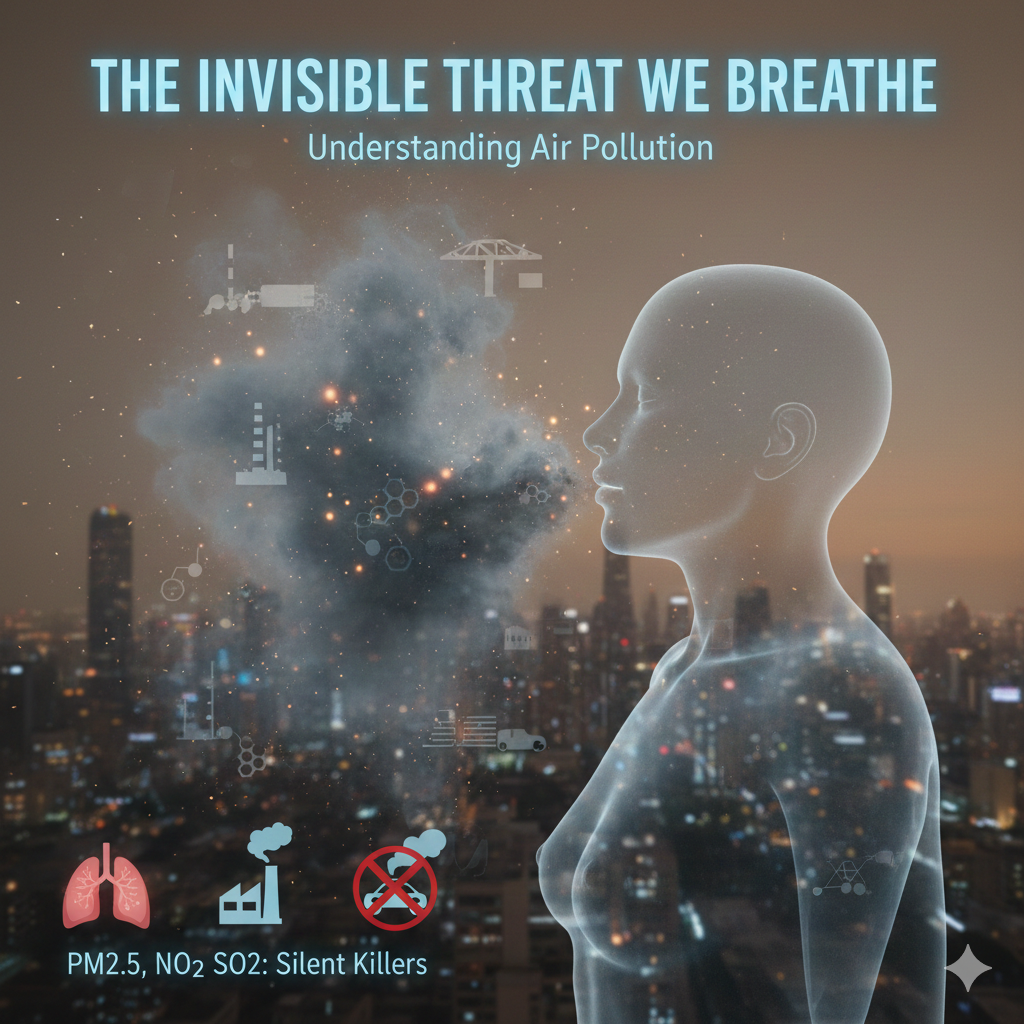
The Invisible Threat We Breathe: Understanding Air Pollution
Air pollution is a silent crisis affecting nearly everyone on Earth. 99% of the global population breathes air that exceeds World Health Organization (WHO) safety guidelines. It’s more than just smog; it’s a mix of harmful gases and tiny particles that pose a major risk to our health and our planet.
What is Air Pollution?
Air pollution is the contamination of the atmosphere with substances like gases, dust, smoke, and chemicals in amounts that are harmful to humans, other living beings, and the environment.
Key Causes
Most air pollution stems from human activities, particularly the burning of fossil fuels.
- Transportation: Vehicle exhaust releases nitrogen oxides, carbon monoxide, and particulate matter, especially in urban areas.
- Industry and Power Plants: Burning coal and oil for electricity and manufacturing emits sulfur dioxide and heavy metals.
- Household Activities: In many low- and middle-income countries, burning wood, charcoal, or kerosene for cooking and heating causes dangerous indoor air pollution.
- Natural Sources: Wildfires, dust storms, and volcanic eruptions also contribute to poor air quality.
UKMSSB Nursing Officer Vacancy 2025
Health and Environmental Impacts
The effects are far-reaching:
- Health: Air pollution is a leading cause of stroke, heart disease, lung cancer, asthma, and other respiratory illnesses, leading to millions of premature deaths annually. Children, the elderly, and people with pre-existing conditions are most vulnerable.
- Environment: Pollutants contribute to acid rain (damaging forests and buildings), the depletion of the ozone layer, and global warming by trapping heat in the atmosphere.
The Invisible Threat We Breathe: Understanding Air Pollution
What Can We Do?
Addressing air pollution requires collective action from governments, industries, and individuals:
- Use Public Transport or Carpool: Opt for walking, cycling, or public transport to reduce vehicle emissions.
- Conserve Energy: Turn off lights and appliances when not in use. This reduces the amount of fossil fuels burned to generate electricity.
- Support Clean Energy: Advocate for and use renewable energy sources like solar and wind power.
- Plant Trees: Trees act as natural air filters, absorbing carbon dioxide and releasing oxygen.
- Stay Informed: Monitor your local air quality using resources like AirNow.gov to take necessary precautions on high-pollution days.
Clean air is a human right. By making conscious choices in our daily lives and advocating for stronger policies, we can work towards a healthier, more sustainable future for everyone.
RELATED POSTS
View all


Miss Universe 2025: Mexico’s Fatima Bosch Claims Crown
November 22, 2025 | by monuyadaver@gmail.com
Sustainable development
December 27, 2025 | by monuyadaver@gmail.com